BEHIND THE WHEEL: from self-awareness to more conscious youth work


1 / 8
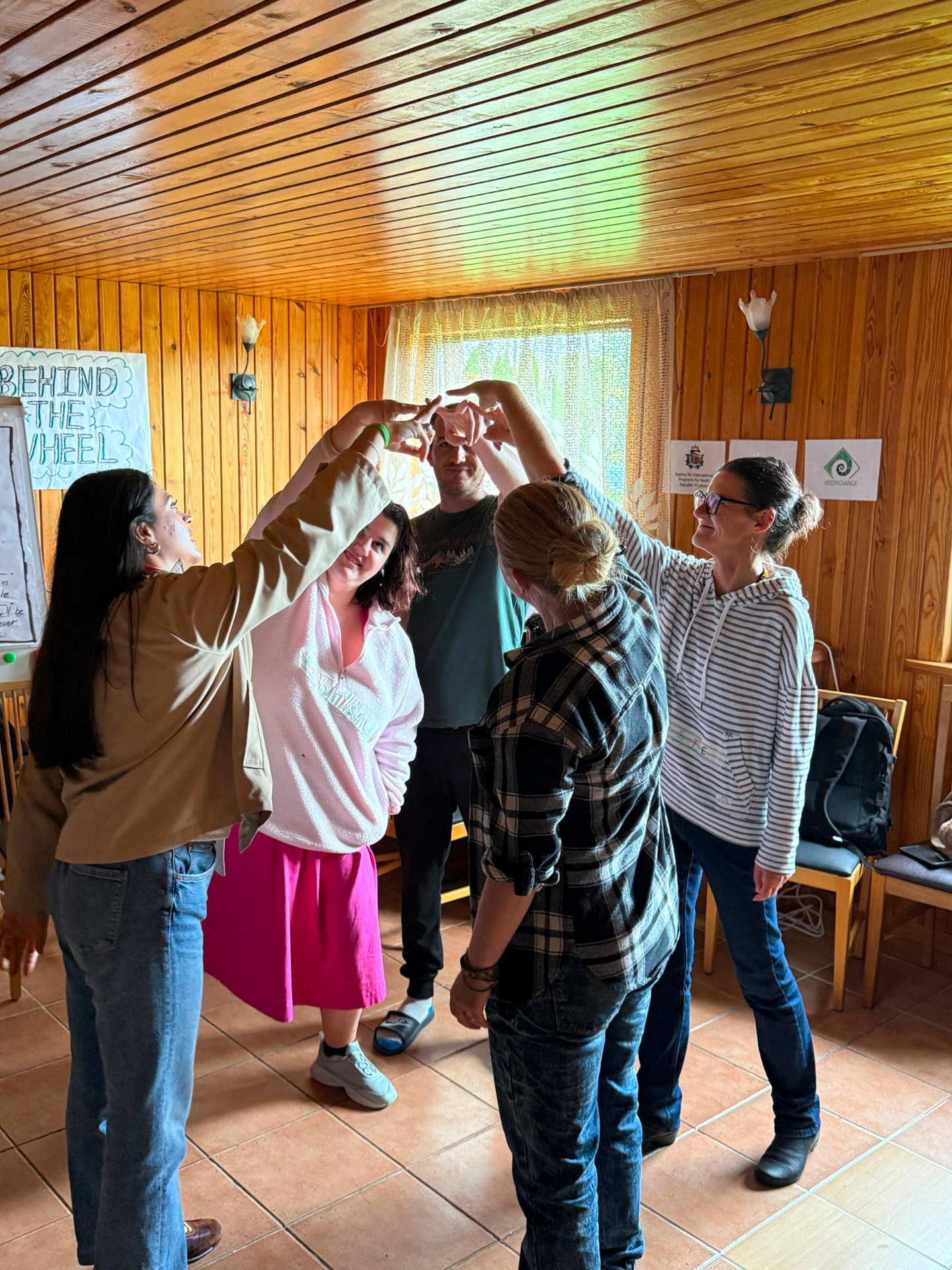
The international Erasmus+ training BEHIND THE WHEEL brought together 29 youth work professionals from eight countries in Bernāti to strengthen self-awareness, communication, coaching and facilitation skills.
From 17 to 25 August 2026, the association Keep the Change held the international Erasmus+ training course for youth workers “BEHIND THE WHEEL” in Bernāti, South Kurzeme. The project brought together 29 youth workers, trainers, facilitators and other youth work professionals from Latvia, Germany, Poland, Spain, Georgia, Albania, Slovenia and Lithuania.
The project was implemented within Keep the Change’s Erasmus+ accreditation in the field of youth (project No. 2026-1-LV02-KA151-YOU-000390742) and was the final international mobility activity of this accreditation period.
Who is behind the wheel when we work with young people?
BEHIND THE WHEEL was built around the idea that youth workers are often “behind the wheel” of the learning process. The way they communicate, respond to stress, lead a group, understand their emotions and manage their energy also shapes young people’s experiences and wellbeing.
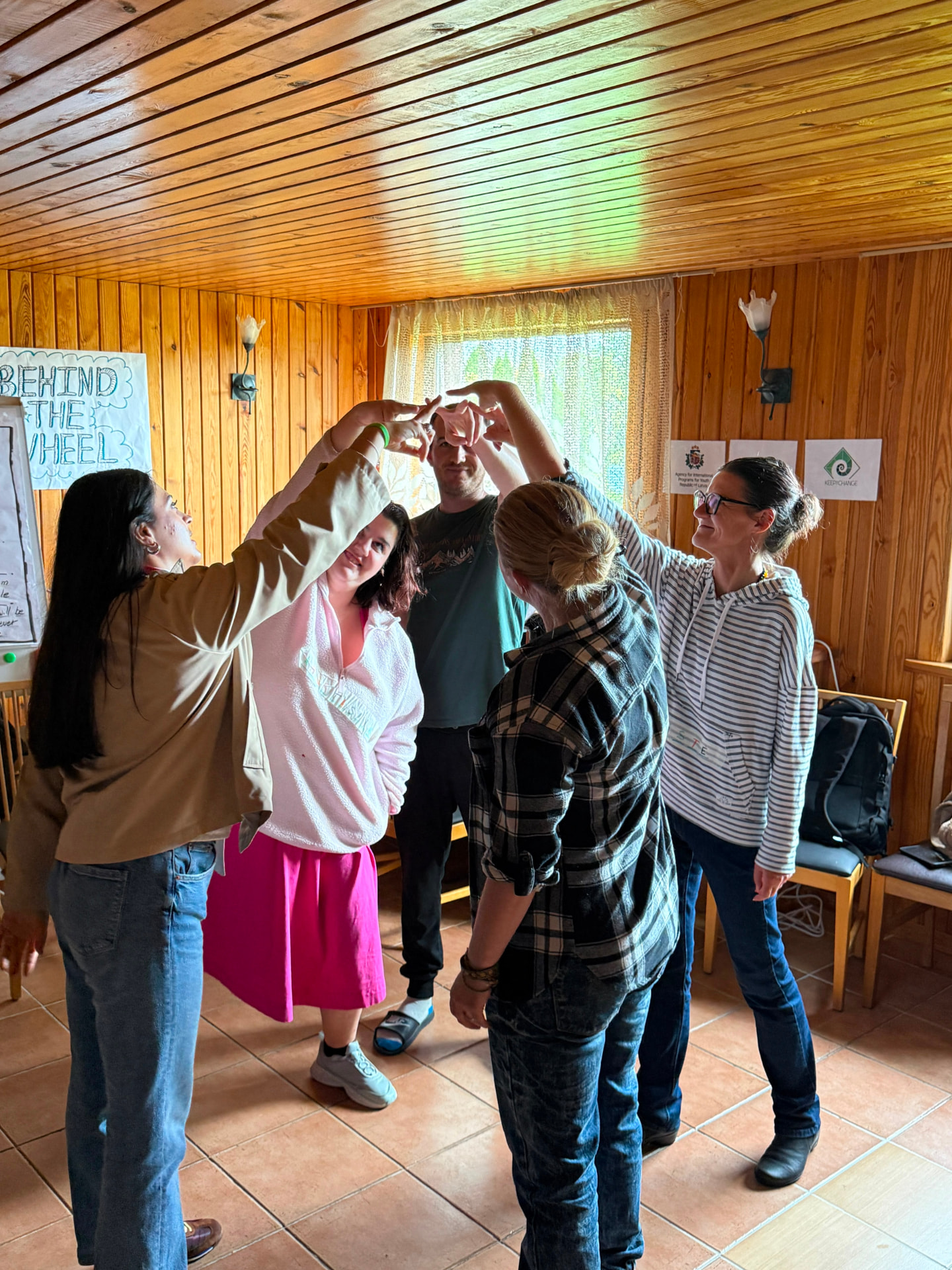
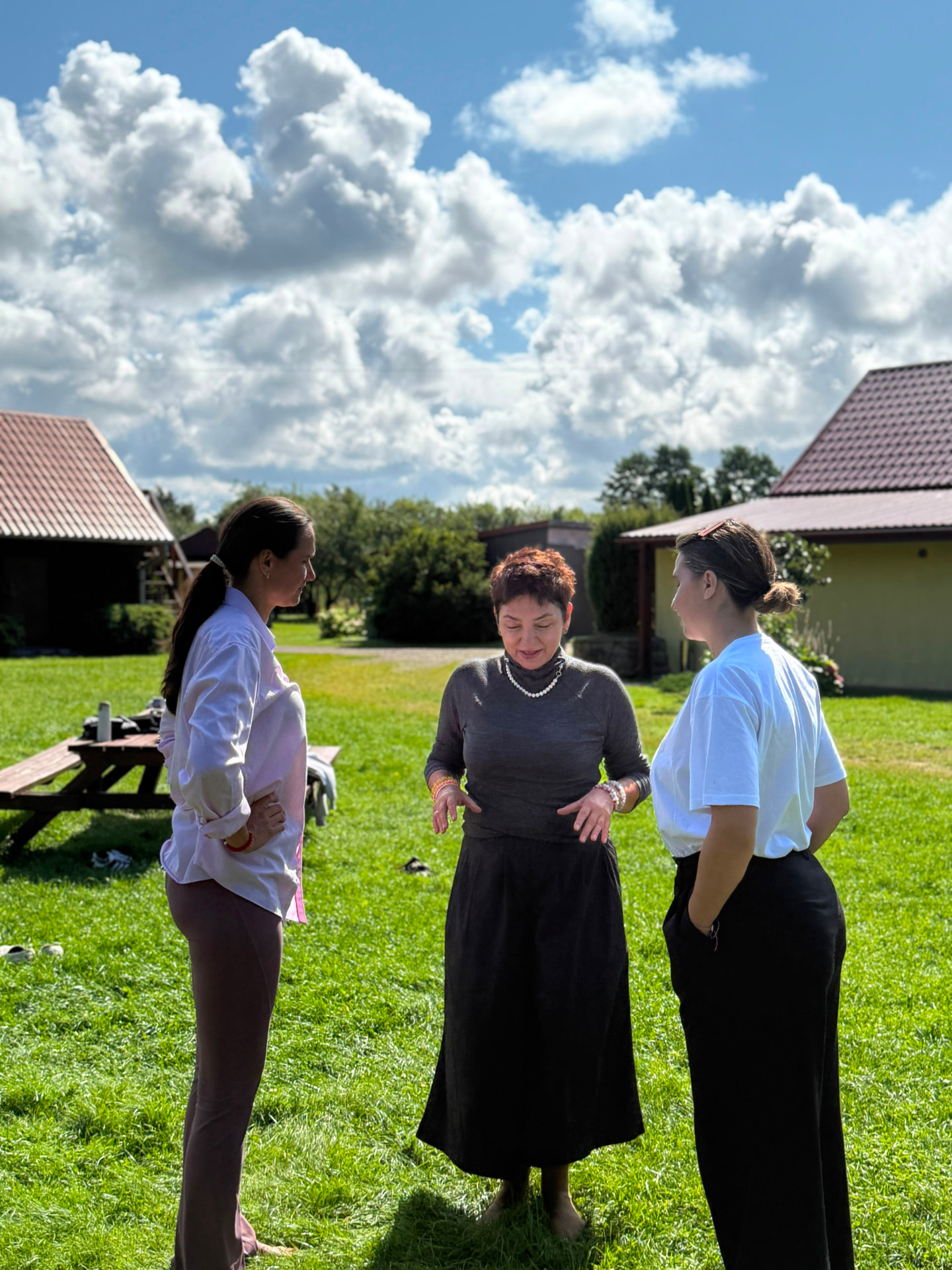
During seven activity days, participants did not only learn new youth work methods. They first turned their attention inward—to their communication, emotions, needs, values, bodily responses and professional role.
The training combined non-formal education, coaching, reflection, mindfulness and embodiment-based methods. Participants explored how stress and tiredness influence communication and reactions, learned to better recognise and understand emotions, practised active listening and open questions, and discovered the GROW coaching model.
One practical communication principle was “STOP — CHECK — CHOOSE”: pause before reacting automatically, notice your interpretation and emotional state, and only then consciously choose how to respond.
From participant to facilitator
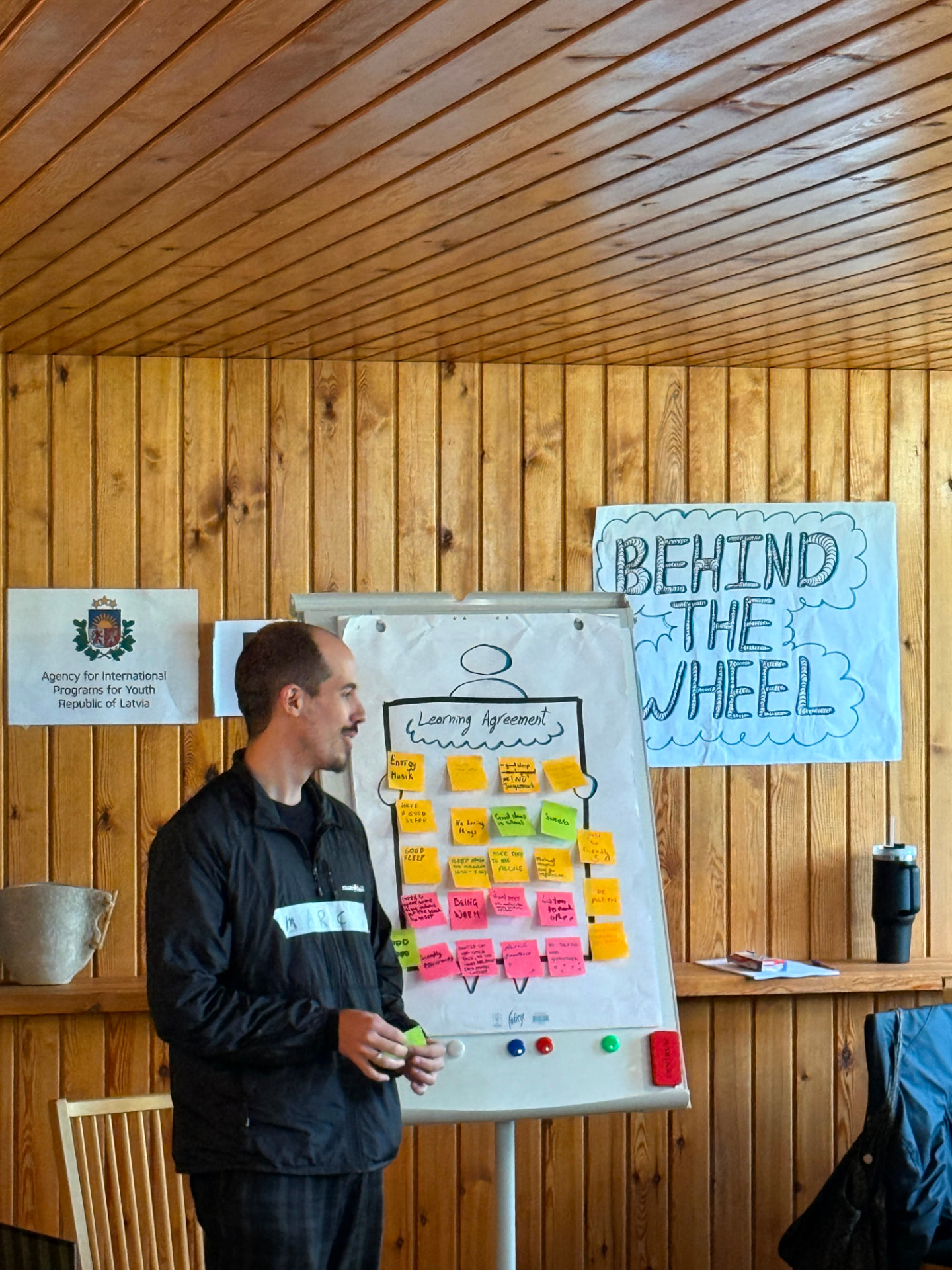
Learning by doing was central to the project. Participants designed and led learning sessions for the rest of the group, practising facilitation, teamwork, time planning and adaptation to unexpected situations.
After each session, they received feedback, analysed their experience and considered what they would do differently next time. At the end of the project, participants also shared their own knowledge and methods—from emotional intelligence and time management to stress reduction and creating Erasmus+ projects.
Reflection remained an essential part of the learning process. Participants kept learning journals, regularly reviewed their experiences and assessed how their understanding of themselves and their professional work had changed during the week.
Learning that continues in youth work
The final evaluation highlighted important growth in communication, emotional self-awareness, teamwork, reflection, coaching and facilitation. Several participants said they had learned to listen more, rush less to give advice, notice their emotional reactions and use embodiment-based methods. Leading activities themselves, receiving feedback and learning from real facilitation experience were also especially valuable.
Participants plan to use the methods and experience in their organisations, youth centres, schools, communities and future international projects. The connections created during the training have also laid foundations for further cooperation among youth workers and organisations from different countries.
Keep the Change director and project trainer Andra Štāle said: “In this project, it was important not only to give participants new methods, but to let them experience those methods themselves—to participate, lead, make mistakes, receive feedback, reflect and try again. We can know hundreds of methods, but so much depends on how we enter the room: how aware we are of our energy, emotions, boundaries and reactions. To support young people well, we must first learn to be more consciously present with ourselves.”
BEHIND THE WHEEL concludes Keep the Change’s cycle of international mobility activities for this Erasmus+ accreditation period. The knowledge, methods and international connections developed during the project will continue through participants’ daily work with young people across eight countries.
Co-funded by the European Union. The views and opinions expressed are solely those of the author(s) and do not necessarily reflect those of the European Union or the funding institution—the Agency for International Programs for Youth. Neither the European Union nor the funding institution can be held responsible for them.
Information prepared by Andra Štāle, director of Keep the Change.