REAL TALK: from inner dialogue to communication in the digital world
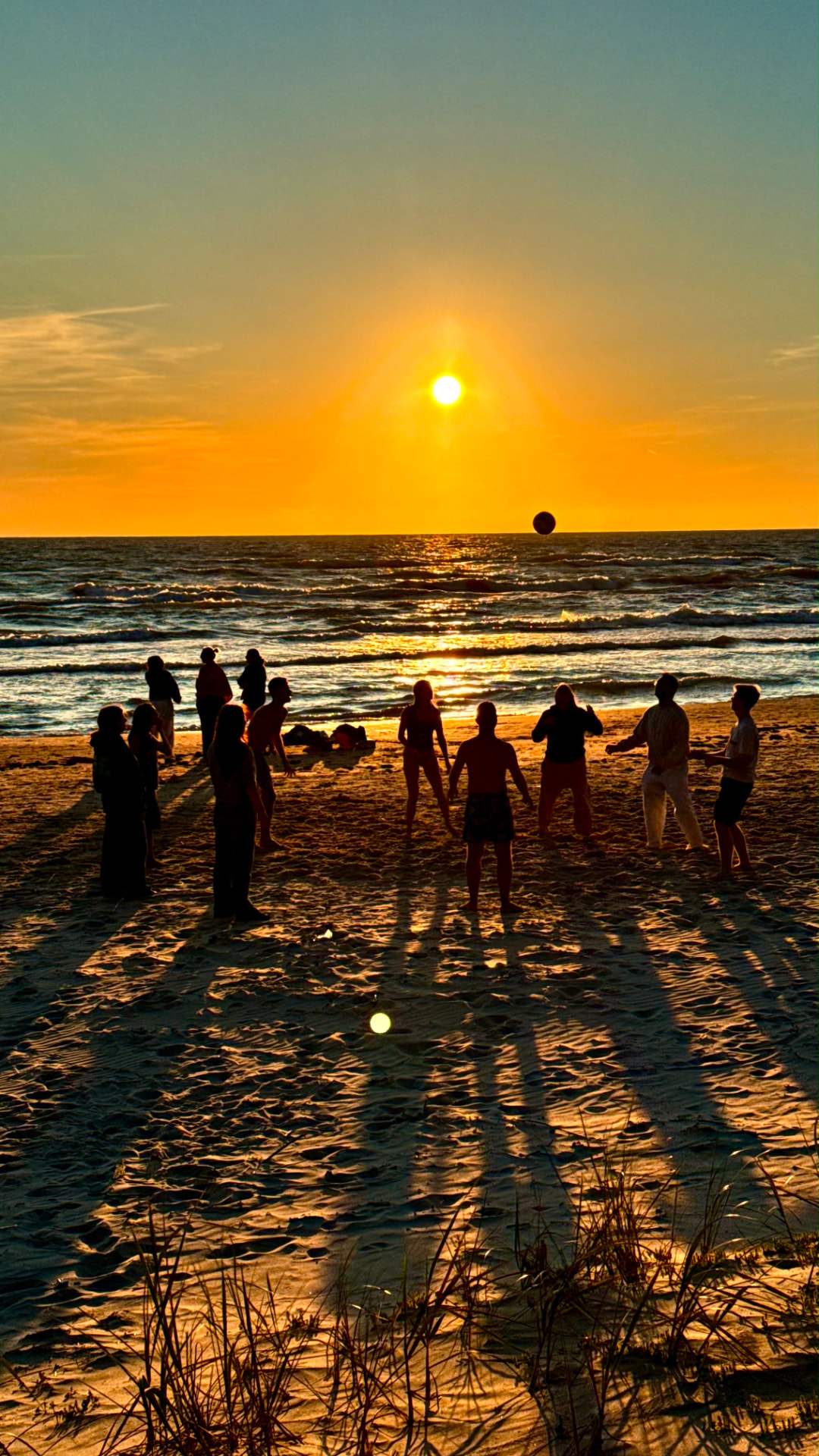
From 5 to 13 August 2026, Keep the Change hosted the Erasmus+ youth exchange "REAL TALK" in Bernāti, South Kurzeme, bringing together 28 young people, group leaders and facilitators from Latvia, Poland, Italy and Greece to explore honest communication — with others and with themselves.
From 5 to 13 August 2026 in Bernāti, South Kurzeme, the association Keep the Change implemented the Erasmus+ youth exchange project "REAL TALK", organised within the organisation's Erasmus+ youth accreditation (project No. 2026-1-LV02-KA151-YOU-000390742).
The project gathered 28 young people, group leaders and facilitators from Latvia, Poland, Italy and Greece. Over nine days, participants examined communication from many angles — starting with the conversation we have with ourselves and the ability to truly hear another person, and moving on to communication on social media and the influence of the digital environment on our views.
REAL TALK — about being able to speak truly and listen truly
We communicate constantly: in conversations, relationships, at work, on social media and even inside our own thoughts. But speaking does not yet mean being heard, and listening does not yet mean truly hearing the other person.
That is why the central question of "REAL TALK" was how to build more mindful, respectful and open communication, both with ourselves and with the people around us.
Across seven activity days, using non-formal education methods, participants explored their own communication style, inner dialogue, emotions, personal values and needs, boundaries in relationships, empathic listening, how misunderstandings arise, and conflict resolution.
One activity invited young people to imagine their inner dialogue as a radio station and to ask: which "station" plays most often in my head? Doubt, comparison, confidence, motivation, or overthinking? In this creative way, participants learned to notice how the conversation with oneself shapes emotions, self-esteem and communication with others.
In other sessions, young people practised empathic listening in pairs, analysed body language and facial expressions, examined their life roles and values, discussed the causes of misunderstandings and learned to better understand different communication styles.
From face-to-face conversation to communication online
A significant part of the project was devoted to communication in the digital environment.
Participants discussed the differences between communicating in person and online, social media comments and their impact on people, critical thinking, algorithms, disinformation and artificial intelligence. They analysed how the digital environment shapes the information we see every day, our ideas about the world and the way we talk to each other.
One of the key takeaways was the need to think much more carefully about what we write on social media, because behind the screen there is always a real person whose emotions and life situation we do not know.
To turn learning into practical experience, young people took part in debates, team challenges, improvisation and reflection activities, and international teams created short films. The filmmaking process became hands-on training in cooperation: teams had to agree on an idea, divide roles, listen to different opinions, resolve disagreements and reach a shared result.
Learning to hear not only others, but also yourself
Project evaluation results show that participants found the activities on empathic listening, inner dialogue, emotions, personal values, life roles, teamwork and communication misunderstandings especially meaningful.
Participants said they had become more open to conversations, more confident in expressing their opinions and feelings, more aware of their boundaries and communication habits, and more willing to listen to differing views.
For several young people, an important gain was also the courage to communicate in English and to cooperate in an international environment. The activities encouraged participants to step outside their comfort zone, speak in front of others, share personal reflections and work with people whose experience and communication style differ from their own.
As one participant concluded: "My main gains are the ability to listen more — not only to other people, but also to myself — and not to rush to conclusions about someone after a first impression. I have also become better at teamwork and at communicating with people who are very different from me."
Another participant highlighted empathic listening as a skill they would keep using in their relationships after the project, while others mentioned recognising misunderstandings, reading body language, seeing their values more clearly and being more open to different people and perspectives.
An international setting as a place to learn communication
"REAL TALK" was not only a project about communication theory — living and learning together in an international group became a practical communication laboratory.
Young people from four countries had to find a common language, accept different opinions, habits and communication styles, learn to cooperate and sometimes resolve real misunderstandings. These everyday situations allowed them to experience in practice what was discussed in the sessions.
Andra Štāle, head of Keep the Change, emphasised: "We often think communication means speaking beautifully or convincingly. But in this project we wanted to show young people that communication starts much earlier — with the ability to hear yourself. To understand your emotions, needs, values and boundaries. Only then can we learn to truly listen to another person. An international environment is very valuable for this, because there we quickly realise that people can think, feel and communicate very differently, and my way is not the only right one. For me, one of the most important lessons of the project was very simple: before you draw conclusions about another person, talk to them."
Alongside the learning activities, intercultural learning, shared daily life in Bernāti, informal conversations and new international contacts were an important part of the project. In the evaluation, participants noted that despite different countries, ages and life experience, they also discovered much in common — similar emotions, challenges and the need to be heard and accepted.
"REAL TALK" was implemented within Keep the Change's Erasmus+ youth accreditation. The organisation continues to create international non-formal education opportunities where young people can develop skills, broaden their horizons, build international contacts and gain practical experience they can use in everyday life long after a project ends.
Co-funded by the European Union. This publication reflects only the views of the author(s), and not necessarily those of the European Union, the European Commission or the Agency for International Programs for Youth, which cannot be held responsible for any use of the information it contains.