Voice for Change: youth workers strengthen communication and leadership skills in Bernāti
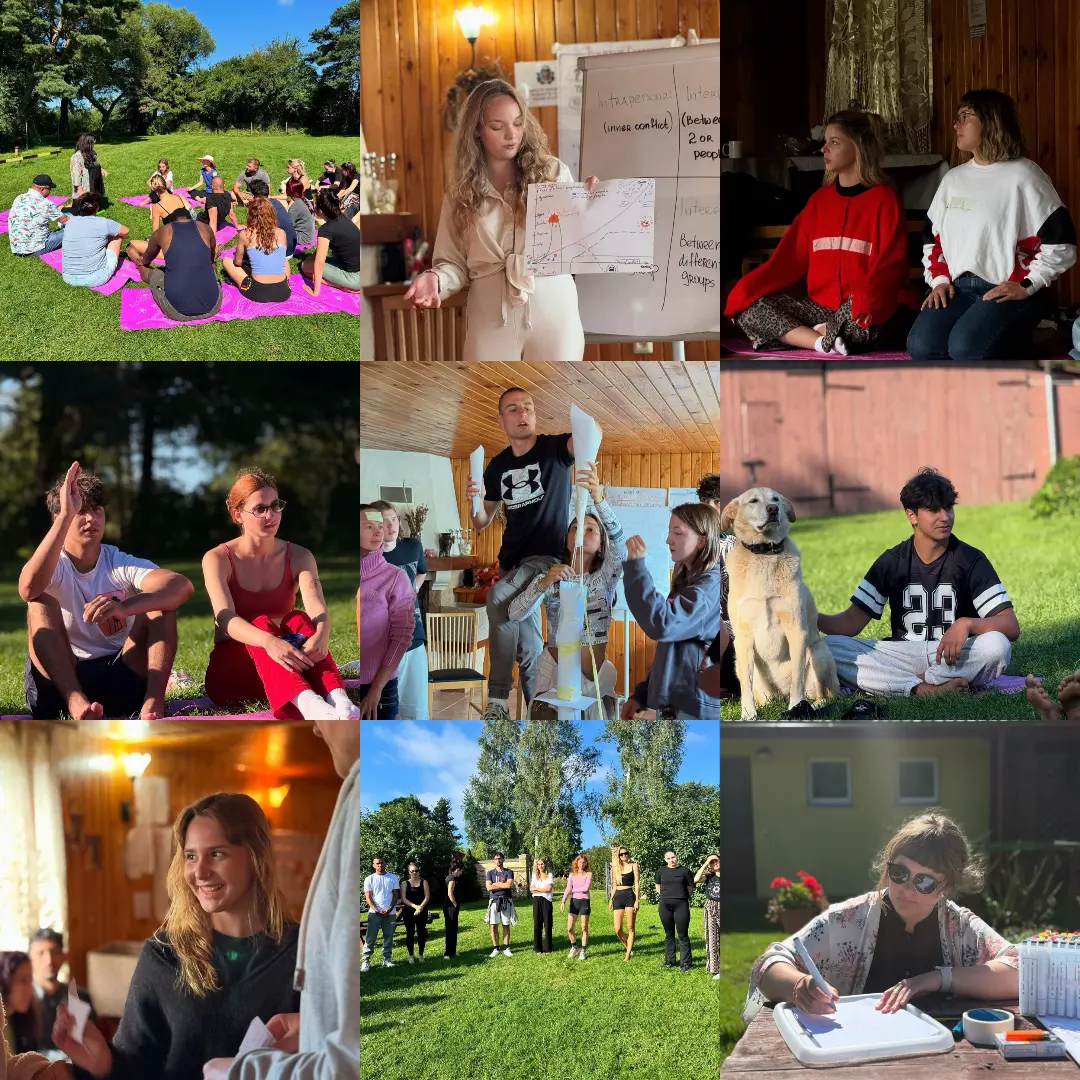
From 16 to 24 August 2025, youth workers and active young people from several European countries gathered in Bernāti to develop communication, dialogue and leadership skills for meaningful youth work and civic participation.
From 16 to 24 August 2025, the international training course “Voice for Change” (project No. 2025-1-LV02-KA151-YOU-000298179), organised by Keep the Change, took place in Bernāti. Youth workers and active young people from several European countries came together to develop communication, dialogue and leadership skills essential for high-quality youth work and meaningful civic participation.
From strangers to a team
The first day focused on creating a safe environment and a shared learning space. Participants got to know one another, shared their expectations, agreed on group principles and created a common roadmap of the skills they wanted to develop. Through introductory activities, team challenges and reflection circles, strangers became a cohesive learning group.
The opening days explored the foundations of communication: how voice, body language and presence influence whether and how we are heard. Participants examined their strengths and areas for growth, became more aware of their impact on a group, and practised expressing ideas clearly while making room for other voices.
Communication beyond words
Participants explored communication without words through movement, body language, eye contact, listening and empathy. Practical activities demonstrated how silence, physical contact and attitude can affect a conversation, and how to create a space where others feel heard and accepted.
They also learned about nonviolent communication: observing without judgement, naming emotions, recognising needs and making clear, respectful requests. Real examples from NGO life helped participants analyse how communication can either intensify or reduce conflict.
The body as a language of emotion
Using movement and creative tasks, participants explored how anger, joy, sadness and fear appear in the body and affect communication. The experience showed that emotions are not an obstacle, but a bridge to a more authentic connection with ourselves and others.
A simulation game recreated conflicts, uncertainty and challenges commonly faced in youth work and community life. Participants then analysed each situation through the lens of nonviolent communication, experiencing how empathy and a clear language of needs can change the direction and outcome of a conversation.
From theory to practice
During the second half of the project, the focus shifted from individual development to leading others. Groups selected themes including conflict resolution, the mind-body connection, body language and self-expression, storytelling in communication, and intercultural communication, then designed practical workshops for their peers.
On the fifth and sixth days, participants stepped into the roles of trainers and facilitators. They led sessions, adapted to group needs, responded to unexpected situations and received structured feedback. This gave them confidence that their learning was not only theoretical, but a set of practical tools for their organisations, schools and youth centres.
Looking ahead
On the final day, participants reflected on their achievements, identified their most important discoveries and made personal commitments to use their new communication and leadership skills after returning home. They expressed gratitude for the safe environment, opportunities to practise and meaningful conversations, while committing to strengthen a culture of dialogue in their communities.
Project leader Andra Štāle emphasised that the strength of “Voice for Change” lies not only in new knowledge, but in participants becoming agents of change themselves: “Our aim was to help youth workers and young leaders find and strengthen their voice—not simply to make it louder, but more conscious, empathetic and responsible. The voices of young people and youth workers are essential to building a more inclusive, civil and democratic society.”
Keep the Change has been delivering international growth projects for young people and youth workers for several years, combining non-formal education with personal leadership, communication and community development. “Voice for Change” continues the organisation’s work to strengthen youth work in Latvia and across Europe, creating environments where young people’s voices are heard and valued.
The project was co-funded by the European Commission’s Erasmus+: Youth in Action programme. The views expressed are those of the authors alone and do not necessarily reflect the official position of the European Union or the Agency for International Programs for Youth.